
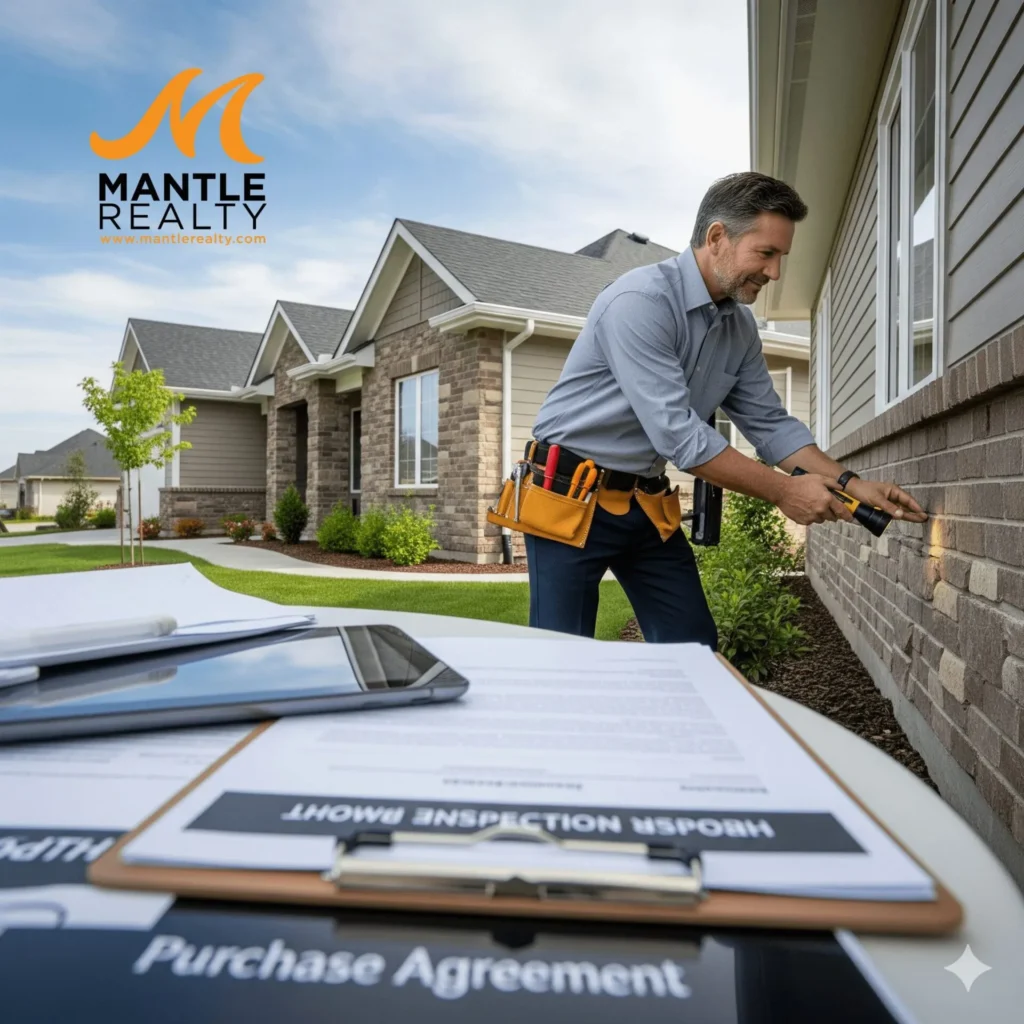
A home inspection is the best money you’ll spend before buying a house. It’s your chance to find out what you’re really buying while you can still negotiate or walk away. In North Carolina, that window is short and firm, so a little planning goes a long way. Here’s how to choose an inspector, what the inspection covers and doesn’t, which extra inspections are worth ordering, and what to do with the report.
Ready to start? Search every home for sale in the Triad on Mantle Home Finder.
Why timing matters in North Carolina
Under the standard NC Offer to Purchase and Contract, inspections happen during the buyer’s due diligence period. Until it ends, you can walk away for any reason, and you’ll generally get your earnest money back. After it ends, an inspection problem usually isn’t a reason to back out anymore.
That means the inspection, any follow-up by specialists, and your repair negotiation all need to fit inside that window. Book the inspection the day your offer is accepted. For more on how the due diligence period works, see our guide to the due diligence fee.
Tip 1: Choose the right inspector
- Use a licensed inspector. North Carolina licenses home inspectors through the NC Home Inspector Licensure Board. Ask for the license number.
- Ask to see a sample report. A good report is clear, organized, and full of photos, with problems ranked by importance.
- Ask about experience with the type of home you’re buying: older homes, crawl spaces, homes on well and septic, or new construction.
- Don’t shop on price alone. The difference between a thorough inspector and a quick one can be thousands of dollars in missed problems.
Tip 2: Know what a home inspection covers, and what it doesn’t
A general home inspection is a visual check of the home’s major systems and structure, including:
- Roof, gutters and visible roof structure
- Foundation, crawl space or basement, and visible framing
- Plumbing, water heater and visible pipes
- Electrical panel, wiring, outlets and GFCI protection
- Heating and air conditioning
- Attic, insulation and ventilation
- Windows, doors, built-in appliances, and grading and drainage around the house
What it usually doesn’t cover: anything hidden inside walls or under flooring, cosmetic issues, the inside of sewer lines, wells and septic systems, pest damage (unless a termite inspection is added), and code compliance. Inspectors can’t move the seller’s furniture or open finished walls, so some things will always be out of view.
Tip 3: Add the specialized inspections your home needs
- Termite (wood-destroying insect) inspection. Termites are common in North Carolina, and some loans, such as VA loans, often require this report.
- Radon test. Radon levels vary across the state. The test is inexpensive and often done during the inspection.
- Sewer scope. A camera inspection of the sewer line, especially worthwhile for older homes and homes with big trees nearby.
- Well and septic inspections. Common for rural homes in Davidson, Randolph and surrounding counties. These are separate from the general inspection.
- Specialists for red flags. A roofer, HVAC technician or structural engineer when the general inspector recommends further evaluation.
If you’re using a government-backed loan, also read how lender requirements differ from your own inspection: FHA, VA, and USDA.
Tip 4: Go to the inspection
Plan to be there for at least the last part. Inspections commonly take two to four hours, depending on the size and age of the home. Walking through with the inspector helps you understand which findings are serious and which are routine maintenance. Good questions to ask:
- Which of these items are safety issues?
- Which are the most expensive to fix, and roughly how old are the roof, HVAC and water heater?
- What would you want a specialist to look at?
- What should I plan to maintain or replace in the next few years?
Tip 5: Read the whole report, then prioritize
Nearly every report has a long list of findings. Don’t panic, and don’t ignore it either. Sort the items into three groups:
- Safety and major systems: electrical hazards, roof leaks, structural movement, active water problems, failing HVAC. These are worth negotiating over.
- Near-term costs: an aging water heater or a roof with a few years left. Factor them into your budget and your offer.
- Routine maintenance and cosmetic items: caulking, loose handrails, minor wear. Usually not worth a fight.
For the warning signs that matter most, see home inspection red flags.
Tip 6: Negotiate smart, and before the deadline
In North Carolina, the seller isn’t required to make repairs. You can ask for repairs, a credit where your loan allows it, or a lower price, but reach an agreement in writing before due diligence ends. Read why negotiation after the inspection isn’t guaranteed before you make your request.
Tips for first-time buyers
- Never skip the inspection to make your offer more competitive. You can shorten the timeline or limit repair requests instead.
- Get an inspection on new construction too. Builders miss things, and a pre-drywall or final inspection is worth it.
- Budget for the inspection and add-ons as part of your upfront costs, alongside the due diligence fee and earnest money. Our cash-to-close calculator helps you see the full picture.
A tip for sellers: consider a pre-listing inspection
Sellers can hire their own inspector before listing. Finding problems early lets you fix them on your schedule or price the home accordingly, instead of losing a buyer halfway through due diligence. Keep in mind that known problems generally need to be disclosed.
Frequently asked questions
Do I need a home inspection in North Carolina?
It isn’t legally required, and lenders don’t require a general inspection, but it’s strongly recommended. It’s the only way to know the home’s condition while you can still walk away during due diligence.
How much does a home inspection cost?
Prices depend on the size, age and location of the home, and add-ons like termite, radon or sewer inspections cost extra. Get quotes from a couple of licensed inspectors, and remember that thoroughness matters more than the lowest price.
What repairs are mandatory after a home inspection?
In a typical NC resale, none are required by law. Some repairs may be required by the lender, especially with FHA, VA and USDA loans. Everything else is a negotiation between buyer and seller.
Can I be at the home inspection?
Yes, and you should. Seeing issues in person and asking questions makes the report much easier to understand.
What if the inspection finds a major problem?
Get a specialist’s opinion and a written estimate, then decide whether to ask for repairs, a credit or a price reduction, or to walk away before due diligence ends.
Buying in the Triad? Talk to a Mantle Realty agent. We’ll help you schedule the right inspections and make sense of the report before your deadline.