

You type your address into Zillow and a number shows up. That number claims to be what your home is worth. Plenty of homeowners treat it as fact, and plenty of buyers use it to decide what to offer. The problem is simple: a Zestimate is an estimate built by a computer that has never seen your house. If you’re thinking about selling, buying, or just want to know what your home is really worth, here’s how the Zestimate works, where it falls short, and what to use instead.
What is a Zillow Zestimate?
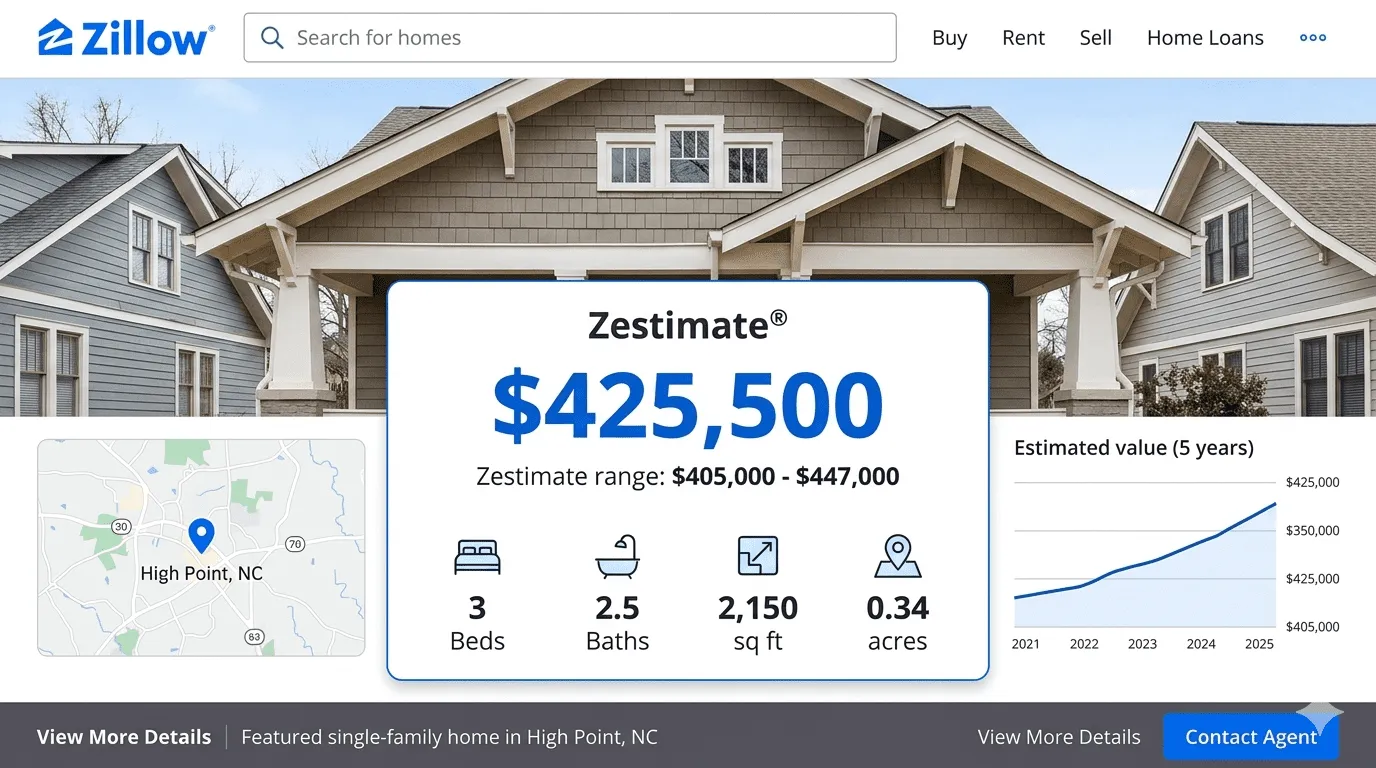
A Zestimate is a home value estimate produced by Zillow’s automated valuation model. Zillow pulls in public records, recent sales, listing data and details owners submit, then uses an algorithm to calculate a value for millions of homes at once.
No one visits the property. No one checks its condition. Zillow itself describes the Zestimate as a starting point, not an appraisal. That distinction matters more than most people realize.
How Zillow calculates a home value
The model looks at:
- Public records such as tax data and prior sale prices
- Home facts like bedrooms, bathrooms, square footage and lot size
- Recent nearby sales and homes currently for sale
- Broader market trends
Each home becomes one data point in a much larger system, and the algorithm compares it to homes that look similar on paper. That works reasonably well for cookie-cutter subdivisions with lots of recent sales. It works much less well when homes, lots and neighborhoods vary, which describes a lot of the Triad.
How accurate is a Zestimate?
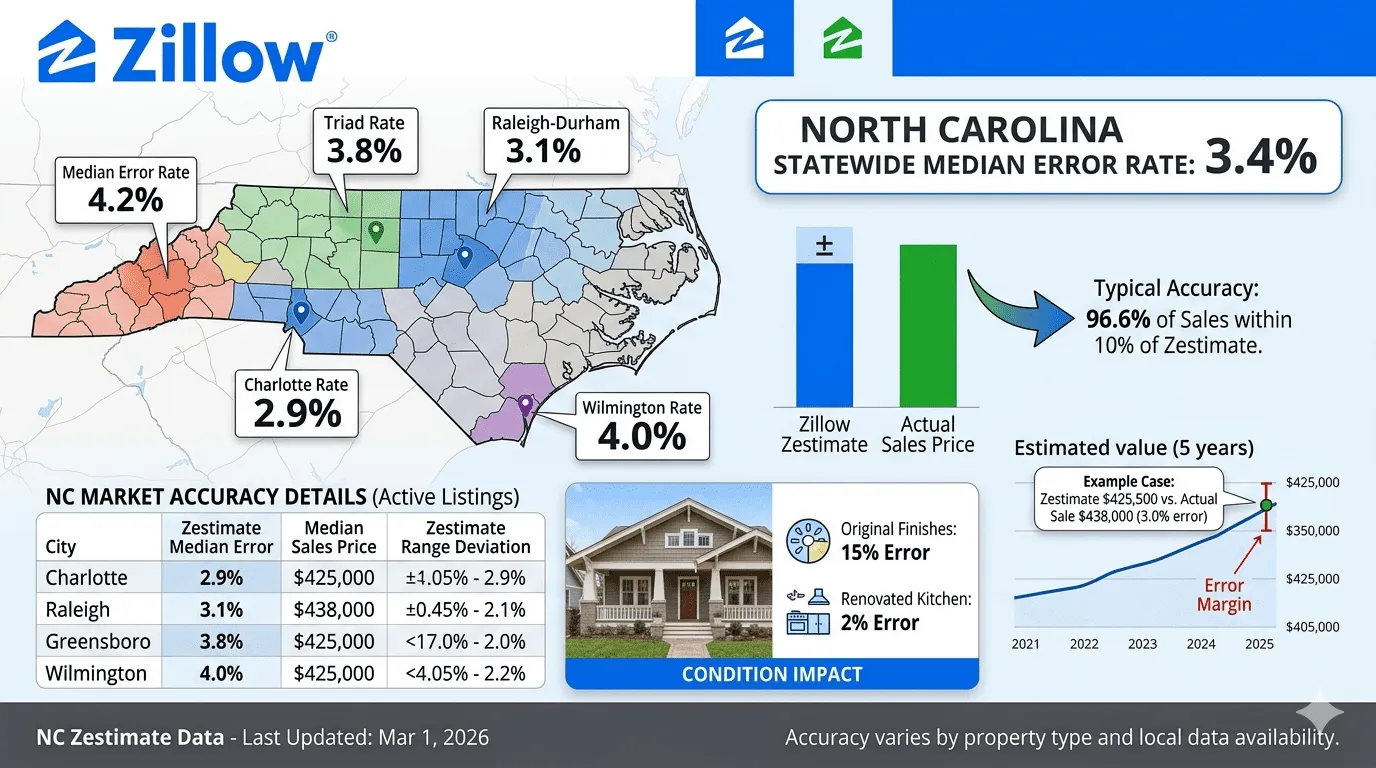
Zillow publishes its own error rates, and they’re much better for homes that are listed for sale (when Zillow can see the list price and listing details) than for homes that aren’t. For off-market homes in North Carolina, Zillow’s published median error has been in the range of 7 to 8%. The median means half of homes are off by more than that.
What that error means in dollars
Say Zillow puts your home at $225,000. A 7.5% miss in either direction means the real value could be anywhere from about $208,000 to $242,000. That’s a $34,000 range, and pricing your home at the wrong end of it can cost you real money.
Why Zestimates miss: what Zillow can’t see
Condition and updates
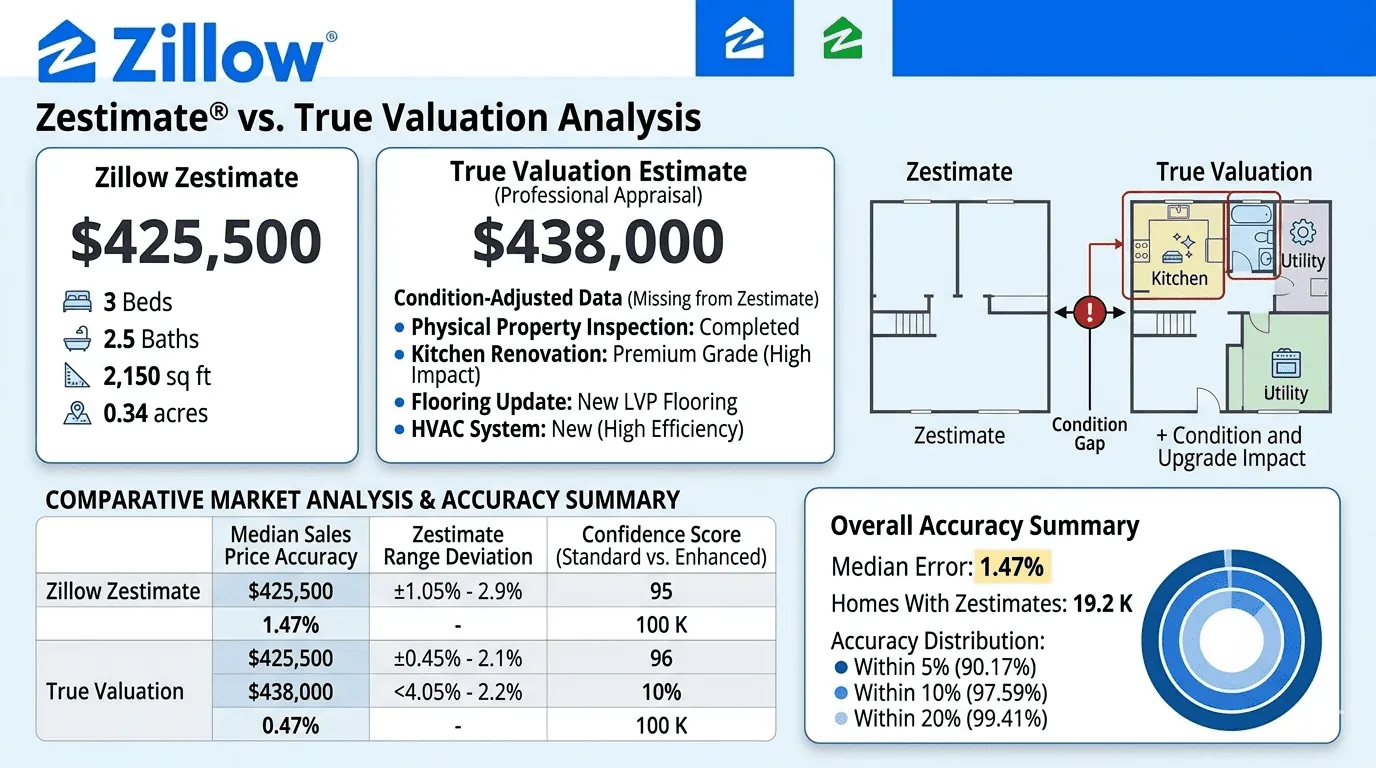
Zillow can’t walk through your home. It doesn’t know about a $40,000 kitchen remodel, a new roof or new HVAC, and it doesn’t know about a 25-year-old furnace or a leaking crawl space either. Two houses that look identical in the tax records can be worth very different amounts.
Unrecorded improvements
Finished basements, converted garages, added bathrooms and decks often never show up in public records. If the records still list your home as three bedrooms and one bath, that’s what the algorithm prices, no matter what you’ve added since.
Unique features and land
Acreage, views, water frontage, detached shops and custom features don’t fit neatly into a database. These are exactly the details that can move a home’s value the most.
Neighborhood differences
Zillow often leans on sales across a whole ZIP code or wider area. But value is set street by street: school assignments, a busy road, a new development next door, or a neighborhood that’s suddenly in demand. The algorithm can’t see those shifts until they show up in closed sales, which can take months.
Fast-moving markets
Interest rates, inventory and buyer demand can change within weeks. An automated model updates from past data, so it tends to lag behind the market in both directions.
Why Zestimates struggle in the Triad
The Triad isn’t one housing market. It’s dozens of small ones, and that’s hard on an algorithm.
- Mixed neighborhoods. In Lexington, one street can be updated ranch homes and the next can be older mill houses. Zillow blends them together.
- Rural property. In rural Davidson County, Randolph County and the outskirts of towns like Kernersville, homes vary widely in age, acreage and style, with few truly comparable sales. Automated values are least reliable here.
- Micro-markets. A home near Uptown Lexington doesn’t value the same way as one near High Rock Lake. Homes in Winston-Salem’s Ardmore behave differently from newer suburbs near Clemmons.
How relying on a Zestimate costs sellers and buyers
Sellers who price too low
If the Zestimate is low and you trust it, you list below market value. The home sells fast, maybe with several offers, and you never find out how much you left on the table.
Sellers who price too high
If the Zestimate is high, you list above what buyers will pay. The home sits, price cuts follow, and a stale listing often sells for less than a well-priced one would have. See why overpricing kills momentum.
Buyers who offer by the Zestimate
Buyers get burned too. Offer too low on a well-priced home and you lose it. Offer too high on a home Zillow overvalues and you may face a low appraisal and a gap to cover at closing. Base your offer on recent comparable sales your agent pulls, not on the Zestimate.
Zestimate vs. CMA vs. appraisal
- Zestimate: an automated estimate from public data. Fast and free, but it never sees the home.
- Comparative market analysis (CMA): a local agent compares your home to recent sales, pending sales and active listings that truly match it in size, condition and location. This is how list prices should be set.
- Appraisal: a licensed appraiser inspects the home and writes a detailed report, usually ordered by a lender during a purchase or refinance.
When a Zestimate is useful
Used the right way, it has a place. It’s fine for a rough idea of value, comparing homes at a glance, or watching broad trends over time. It shouldn’t set your list price, your offer, or your financial plans.
How to find your home’s real value
- Start with our instant home valuation for a quick, data-based range.
- Ask a local agent for a CMA based on recent sales that actually match your home.
- If you’re selling, run the numbers with our seller net proceeds calculator to see what you’d walk away with.
Frequently asked questions
How accurate is Zillow in North Carolina?
For homes that aren’t for sale, Zillow’s own published median error in North Carolina has been around 7 to 8%, and half of homes miss by more than that. Accuracy is better for homes that are actively listed.
Why is my Zestimate so different from my appraisal?
The appraiser saw your home’s condition, updates and features in person and chose truly comparable sales. The Zestimate relies on public records, which may be out of date or missing improvements.
Can I change my Zestimate?
You can claim your home on Zillow and update its facts, like bedrooms, bathrooms and square footage, which can affect the estimate. It still won’t reflect condition the way a CMA or appraisal does.
Do buyers and agents use Zestimates?
Many buyers look at them. Agents and appraisers use actual comparable sales instead, and that’s what determines what a home really sells for and appraises at.
Want to know what your Triad home is really worth? Contact Mantle Realty for a personalized home value estimate from a local agent, or meet the team.